
Using WinField’s R7 Tools to help plan harvest
Jul 01, 2019
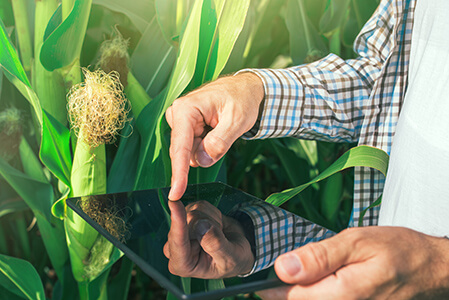
Now is a good time to begin assessing your fields to determine harvest order. A key place to start is with crop maturity, but don’t let that be the only indicator. Two fields planted with 114-day corn can have very different stay-green characteristics. Using WinField United’s R7® Field Forecasting Tool and R7® Field Monitoring Tool can give you a more accurate indication of when it’s time to begin harvest with drydown and biomass comparison data.
The Field Forecasting Tool uses crop algorithms to predict how quickly fields are drying down and can reveal different rates of drying, and the Field Monitoring Tool uses satellite imagery that allows you to see trends in declining vigor by measuring the levels of biomass in the field. The Field Forecasting Tool can also closely predict the percent of moisture of the crop in the field, which is also useful in tracking drying rates. For example, two fields may both be at 22 percent moisture on a given day, but a week later, the tool may show that one field has dried much faster and should be harvested first.
These tools can also assist in placing boots on the ground to bring harvest insight. Perhaps the Field Forecasting Tool has identified a high-yield-potential field, but you notice that stalk integrity of the corn hybrid isn’t holding up to a late-season storm. Knowing that you could have a lot of yield to lose if corn falls flat, you might opt to prioritize this field over a drier one with less yield potential.
The Field Monitoring Tool can also be helpful for cotton producers during this time. By identifying those fields with more biomass and higher-vigor cotton plants, farmers can prioritize which fields should receive PGR applications first.
Contact your local Co-op agronomist or regional WinField representative for more information about using the R7® Tool to prioritize your corn and soybean harvest and cotton PGR plans.
The Field Forecasting Tool uses crop algorithms to predict how quickly fields are drying down and can reveal different rates of drying, and the Field Monitoring Tool uses satellite imagery that allows you to see trends in declining vigor by measuring the levels of biomass in the field. The Field Forecasting Tool can also closely predict the percent of moisture of the crop in the field, which is also useful in tracking drying rates. For example, two fields may both be at 22 percent moisture on a given day, but a week later, the tool may show that one field has dried much faster and should be harvested first.
These tools can also assist in placing boots on the ground to bring harvest insight. Perhaps the Field Forecasting Tool has identified a high-yield-potential field, but you notice that stalk integrity of the corn hybrid isn’t holding up to a late-season storm. Knowing that you could have a lot of yield to lose if corn falls flat, you might opt to prioritize this field over a drier one with less yield potential.
The Field Monitoring Tool can also be helpful for cotton producers during this time. By identifying those fields with more biomass and higher-vigor cotton plants, farmers can prioritize which fields should receive PGR applications first.
Contact your local Co-op agronomist or regional WinField representative for more information about using the R7® Tool to prioritize your corn and soybean harvest and cotton PGR plans.