
Making your ponds pretty and peaceful
Mar 01, 2021
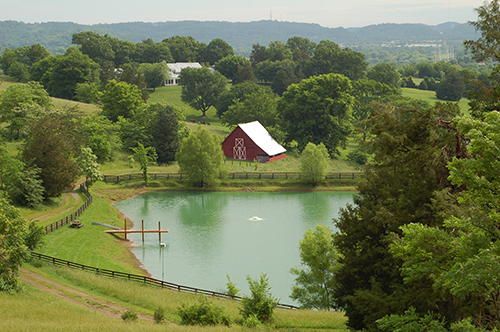
There is nothing that frustrates a pond owner more than controlling the green slime that masks their pond’s natural beauty. We may notice it more in the spring as the warm sun hits the water and nature breaks out in color and new growth, but it could have been hiding during the winter. Algae can lie dormant during the cold months and spring to life as soon as the temperature starts to warm. Now is the time to knock it out.
Algae, under normal levels, is actually beneficial to your pond’s ecosystem because it supports the base of the food chain in your pond. However, too much of it will result in decomposition that removes oxygen from the water, creating an environment that makes it difficult for fish to survive.
Eliminating algae can seem like a daunting task, but luckily there are several methods that have proven to be effective against this aquatic invader. Check out four ways to remove it below!
Co-op is a great place to find supplies for your water treatment plan. Find the nearest location here.
Algae, under normal levels, is actually beneficial to your pond’s ecosystem because it supports the base of the food chain in your pond. However, too much of it will result in decomposition that removes oxygen from the water, creating an environment that makes it difficult for fish to survive.
Eliminating algae can seem like a daunting task, but luckily there are several methods that have proven to be effective against this aquatic invader. Check out four ways to remove it below!
- Chemical algaecides are the fastest way to remove algae. However, the chemicals are harsh and are likely to kill any fish or plants living in the pond. For pond owners who raise fish or have pets and livestock nearby, diluted solutions or hydrogen peroxide are viable alternatives.
- One of the best, environmentally friendly ways to control the growth of algae is to install an aeration system in your pond. Aeration adds oxygen to the water through circulation. This actually encourages growth of beneficial bacteria which consume the nutrients in a pond, leaving no way for algae to survive.
- All-natural bacterial and enzyme blends are an alternative to using an aeration system. Once added to the water, the beneficial bacteria digest organic debris and remove excess nutrients that algae consume to survive. Most bacterial and enzyme blends come in water-soluble bags that are very user-friendly.
- Lastly, for long-term algae control, find ways to reduce the amount of vegetation and excess nutrients entering your pond. For example, properly maintain your septic systems to prevent runoff into your pond, reduce fertilizer applications in the surrounding areas, and keep weeds and vegetation trimmed away from the water’s edge.
Co-op is a great place to find supplies for your water treatment plan. Find the nearest location here.