
What’s the best blanket?
Feb 22, 2021
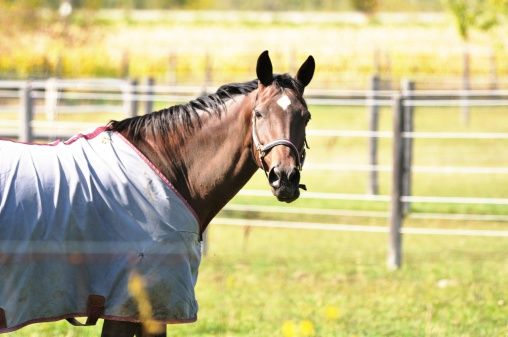
We all understand the concept of blanketing our horses when it’s cold outside, but how do we really know when our horses are cold? After all, they rarely shiver and never complain (at least in ways we understand). A blanket that is too heavy may cause them to sweat, while too one that is too light might actually cause more harm than good. So, what is the correct weight blanket for your horse?
Blankets are divided according to their weight and denier. The denier (D) is responsible for the durability of the fabric – a higher denier equals an overall tougher blanket. Consider one that is 600D or 1200D if your horse is turned out in groups and/or likes to play.
The fill weight of a blanket, measured in grams, determines how warm the blanket will be. Blankets are normally divided into light, medium, heavy, and extra heavy weight. However, here in Tennessee, you will rarely, if ever, need more than a medium weight blanket, unless your horses are body clipped.
Every horse is different, so you may need to experiment with various blankets to ensure that your animal is warm but not overheating. The chart below is a good reference to determine the appropriate weight at varying temperatures.
Keep in mind that not every horse even needs a blanket. Horses that live outside all day, every day naturally grow a thick winter coat and produce plenty of body heat to insulate against the cold. Their hair actually traps heat by standing up rather than lying flat against their body, so a blanket can hinder this natural defense. In this case, a blanket may only be needed if it is raining or snowing.
Your local Co-op has a large selection of winter horse blankets to choose from. Find the nearest location here.
Blankets are divided according to their weight and denier. The denier (D) is responsible for the durability of the fabric – a higher denier equals an overall tougher blanket. Consider one that is 600D or 1200D if your horse is turned out in groups and/or likes to play.
The fill weight of a blanket, measured in grams, determines how warm the blanket will be. Blankets are normally divided into light, medium, heavy, and extra heavy weight. However, here in Tennessee, you will rarely, if ever, need more than a medium weight blanket, unless your horses are body clipped.
Every horse is different, so you may need to experiment with various blankets to ensure that your animal is warm but not overheating. The chart below is a good reference to determine the appropriate weight at varying temperatures.
| Temperature (F) | Unclipped Horse | Body-clipped Horse |
| 50-60 | Nothing |
Nothing or Light weight (0-100 g) |
| 30-40 | Light weight (0-100 g) |
Medium weight (150-250 g) |
| 10-20 | Medium weight (150-250 g) |
Heavy weight (300-400 g) |
| Below 10 | Heavy weight (300-400 g) |
Extra heavy or double blanket (450+ g) |
Keep in mind that not every horse even needs a blanket. Horses that live outside all day, every day naturally grow a thick winter coat and produce plenty of body heat to insulate against the cold. Their hair actually traps heat by standing up rather than lying flat against their body, so a blanket can hinder this natural defense. In this case, a blanket may only be needed if it is raining or snowing.
Your local Co-op has a large selection of winter horse blankets to choose from. Find the nearest location here.