
Save Hay, Save Money
Oct 30, 2023
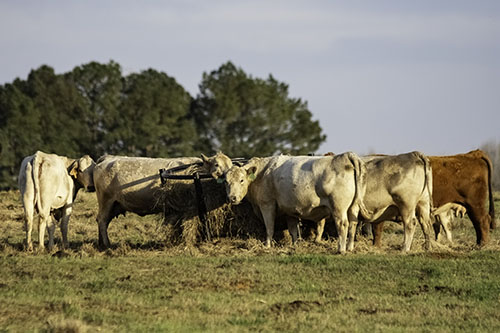
Hay is a vital component of your herd’s diet and is a large factor influencing the profitability of your operation. As winter rolls around, roughage plays an even larger role in keeping your herd healthy and well-nourished. However, the way hay is fed can significantly impact its quality and effectiveness.
With the increased costs of fuel and equipment, farmers need to get the most out of every bale fed. A university study calculating waste from three different types of hay feeders found, on average, that a cone feeder leads to 3.5% waste, a hay ring has 6.1% waste, and a hay wagon has 11.4%. However, those waste percentages are minimal compared to the 18-20% loss that can occur when feeding hay loose on the ground.
Keep reading for a closer look at the types of feeders available at your local Co-op that are sure to optimize your herd’s nutrition while minimizing costs and waste.
There are additional factors to consider when choosing the correct feeder. Cone feeders and hay rings allow cattle to feed in a more natural position, with their heads down. Cattle that have to reach upward or feed from an unnatural position are more likely to throw their heads and toss hay while eating. Furthermore, feeders with slanted bars encourage cattle to keep their heads inside, which also keeps the hay inside where it can’t be trampled and wasted.
The number of cattle and how frequently hay needs to be fed are also factors in choosing the right feeder. It’s always best to have a little extra capacity in case you decide to grow your herd. If all the cattle can eat comfortably at the same time, they will be less agitated, waste less, and consume what they need for better health and gains.
Just remember, no two cattle operations are the same. Your local Co-op is fortunate to have livestock specialists on staff who can help evaluate your specific situation, so you get the most out of what you put into your livestock. Find the nearest store location here.
For more content like this, check out the latest issue of The Cooperator.
With the increased costs of fuel and equipment, farmers need to get the most out of every bale fed. A university study calculating waste from three different types of hay feeders found, on average, that a cone feeder leads to 3.5% waste, a hay ring has 6.1% waste, and a hay wagon has 11.4%. However, those waste percentages are minimal compared to the 18-20% loss that can occur when feeding hay loose on the ground.
Keep reading for a closer look at the types of feeders available at your local Co-op that are sure to optimize your herd’s nutrition while minimizing costs and waste.
- Cone feeders: Cone feeders are often regarded as the most efficient type of feeder. It suspends hay off the ground to minimize trampling and allows cattle more room to keep their heads inside the feeder while eating.
- Hay rings: Hay rings allow cattle to feed without wasting hay by trampling or bedding in it. Your local Co-op carries several types, including a super heavy-duty hay ring, a standard hay ring, and a skirted version.
- Feeder wagons: Feeder wagons can hold from one to four round bales and allow hay to be moved easily to different locations. This is especially useful during the muddy winter season as you rotate pastures.
There are additional factors to consider when choosing the correct feeder. Cone feeders and hay rings allow cattle to feed in a more natural position, with their heads down. Cattle that have to reach upward or feed from an unnatural position are more likely to throw their heads and toss hay while eating. Furthermore, feeders with slanted bars encourage cattle to keep their heads inside, which also keeps the hay inside where it can’t be trampled and wasted.
The number of cattle and how frequently hay needs to be fed are also factors in choosing the right feeder. It’s always best to have a little extra capacity in case you decide to grow your herd. If all the cattle can eat comfortably at the same time, they will be less agitated, waste less, and consume what they need for better health and gains.
Just remember, no two cattle operations are the same. Your local Co-op is fortunate to have livestock specialists on staff who can help evaluate your specific situation, so you get the most out of what you put into your livestock. Find the nearest store location here.
For more content like this, check out the latest issue of The Cooperator.