
Keep in the Heat, Let out the Dust
Feb 15, 2021
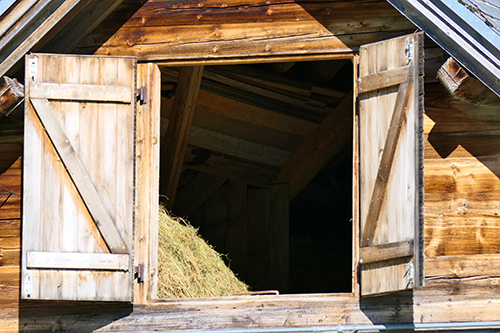
With frigid temperatures across the state, barn owners are closing their doors to keep in the heat. As a result, the air inside the barn can become polluted with dust, mold, and other pathogens that could lead to respiratory problems in your livestock. Proper ventilation is a necessity in order to replace air that is stale with air that is fresh and healthy.
Whether you are building a new barn or improving your current barn, consider these four helpful tips to make sure that your barn is properly ventilated.
Keep windows and doors open during the day
Keep the windows open during the warmest part of the day, and close them at night to protect against the chill. Also, leave the aisle doors open at least a quarter of the way during the day to allow airflow through the barn. Remember, livestock are often hardier than we give them credit for – we shouldn’t have to shield them from cold air, just wind and precipitation.
Give outdoor access to the animals as much as you can
Leave your animals outside as long as they have a run-in shed or area that will allow them to escape the wind. This will lower the amount of dust being stirred up in the barn throughout the day which creates a cleaner environment when you bring them back in at night.
Clean, clean, clean
Consistently clean stalls and remove soiled bedding to prevent a build-up of ammonia. Too much ammonia can irritate the lining of your respiratory tract, as well as your animals’. Also, consider using a dust-free bedding such as wood shavings.
Incorporate ventilation
When planning or modifying your barn design, construct vents at the ridgeline of the roof and at the ends of the barn to increase ventilation. The eaves over the stall areas are also a great area to leave an open space in order to cycle the stale air near the stall floor upwards and out of the barn.
Co-op has the supplies you need to keep your animals happy and healthy through the winter, including a selection of quality wood shavings to suit your needs. Visit the experts at your local Co-op to find the right products for you.
Whether you are building a new barn or improving your current barn, consider these four helpful tips to make sure that your barn is properly ventilated.
Keep windows and doors open during the day
Keep the windows open during the warmest part of the day, and close them at night to protect against the chill. Also, leave the aisle doors open at least a quarter of the way during the day to allow airflow through the barn. Remember, livestock are often hardier than we give them credit for – we shouldn’t have to shield them from cold air, just wind and precipitation.
Give outdoor access to the animals as much as you can
Leave your animals outside as long as they have a run-in shed or area that will allow them to escape the wind. This will lower the amount of dust being stirred up in the barn throughout the day which creates a cleaner environment when you bring them back in at night.
Clean, clean, clean
Consistently clean stalls and remove soiled bedding to prevent a build-up of ammonia. Too much ammonia can irritate the lining of your respiratory tract, as well as your animals’. Also, consider using a dust-free bedding such as wood shavings.
Incorporate ventilation
When planning or modifying your barn design, construct vents at the ridgeline of the roof and at the ends of the barn to increase ventilation. The eaves over the stall areas are also a great area to leave an open space in order to cycle the stale air near the stall floor upwards and out of the barn.
Co-op has the supplies you need to keep your animals happy and healthy through the winter, including a selection of quality wood shavings to suit your needs. Visit the experts at your local Co-op to find the right products for you.