
Home Sweet Hen: How to Build Your Own Chicken Coop
Jul 28, 2025
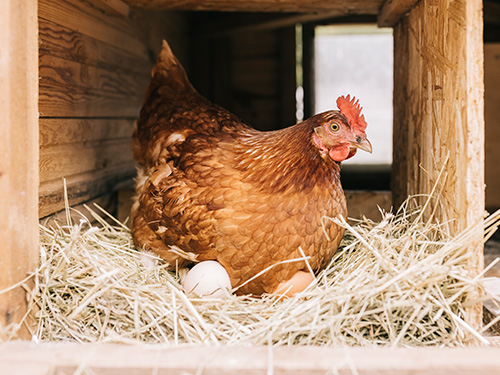
Having a chicken coop might be the next step on your farm-to-table list, with fresh eggs being a motivator to get this accomplished.
But before you get out your circular saw, here are some steps you want to consider before building your own brood of hens.
Chicken math
As a planning measure, know how many chickens you have and how many square feet that will equal.
The average square footage for a chicken inside the coop is 4 square feet. The average for a chicken in the run is 10 square feet.
So if you have 10 chickens, they need at least 40 square feet inside the coop and 100 square feet in the run.
Coop construction
When constructing the coop, you’ll want to use 2x4s to create wall frames.
But you will need openings. That would be a door for access, a chicken pop door and ventilation windows.
Raise it off the ground — at least 18 inches or more — to prevent moisture buildup and deter predators.
Don’t forget about yourself as part of the construction process. Make sure to create a human-size door so you can get inside.
A key to the coop is adding ventilation near the roof to reduce ammonia build-up. It’s also recommended to consider a droppings board under the roost for easier cleanup. Use a deep litter method with pine shavings or straw for low-key maintenance.
Boxes inside the coop
Your chickens are going to want to nest and roost inside their new home.
For roosting bars, place them one to two feet off the ground with a 2x4 flat side up.
If you want nesting boxes, you will need one for every three to four hens. Make sure to place them also one to two feet off the ground.
What you can get at Co-op
The Co-op has a line of chicken food, which is what you will need to keep your hens fed and happy as part of our Co-op Feeds line. We also carry an assortment of items to keep your brood healthy.
You can visit our family of Co-ops across the state at one of our various locations.
But before you get out your circular saw, here are some steps you want to consider before building your own brood of hens.
Chicken math
As a planning measure, know how many chickens you have and how many square feet that will equal.
The average square footage for a chicken inside the coop is 4 square feet. The average for a chicken in the run is 10 square feet.
So if you have 10 chickens, they need at least 40 square feet inside the coop and 100 square feet in the run.
Coop construction
When constructing the coop, you’ll want to use 2x4s to create wall frames.
But you will need openings. That would be a door for access, a chicken pop door and ventilation windows.
Raise it off the ground — at least 18 inches or more — to prevent moisture buildup and deter predators.
Don’t forget about yourself as part of the construction process. Make sure to create a human-size door so you can get inside.
A key to the coop is adding ventilation near the roof to reduce ammonia build-up. It’s also recommended to consider a droppings board under the roost for easier cleanup. Use a deep litter method with pine shavings or straw for low-key maintenance.
Boxes inside the coop
Your chickens are going to want to nest and roost inside their new home.
For roosting bars, place them one to two feet off the ground with a 2x4 flat side up.
If you want nesting boxes, you will need one for every three to four hens. Make sure to place them also one to two feet off the ground.
What you can get at Co-op
The Co-op has a line of chicken food, which is what you will need to keep your hens fed and happy as part of our Co-op Feeds line. We also carry an assortment of items to keep your brood healthy.
You can visit our family of Co-ops across the state at one of our various locations.