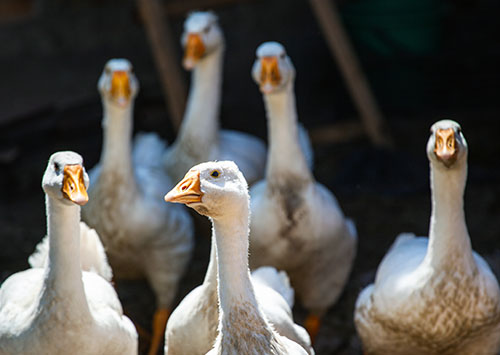
Duck, Duck, Goose

Aug 03, 2021


Are you interested in raising ducks or geese? These birds are a fun and entertaining addition to any farm, and there are a number of good reasons to raise them.
 
Waterfowl can be a real benefit to your garden; they provide high nitrogen fertilizer and help control pests such as grasshoppers, snails, slugs, and Japanese beetle larvae. Additionally, some ducks, such as Campbells and Runners, are excellent layers and can produce over 275 eggs per year.
 
If you are new to raising waterfowl, here are three tips to get you started:
 
  1. Choose a breed to suit your needs
There are numerous breeds of ducks and geese that can be added to your flock, many of which serve different purposes. Refine your search by determining whether you are looking for a pet, breeding stock, or egg layers. As a pet, popular duck breeds include Rouen, Crested, and Mallards, while Pekins are known for making both wonderful pets and egg layers. If you would like to add some geese to the mix, look for Emden, Toulouse, Buff, or Pilgrim which are great as both pets and egg layers.
 
  1. Provide a comfortable environment
You’ll want to make sure your ducks and/or geese have a great home if you want them to stick around. They will need a pond or pool for swimming, a coop and fenced-in space to protect against predators, and a grassy area to hunt for insects. Ducks and geese are also very social creatures, so they will be happiest in pairs or small groups!
 
  1. Find the right waterfowl feed
Choose a nutritionally balanced feed based on your birds’ age and needs. Young ducks and geese require a diet that is high in protein and calories to help them grow strong after hatching, while mature birds may only require a maintenance diet. Also, believe it or not, feeding bread to your waterfowl can actually lead to health concerns like obesity and malnutrition, so it is best to leave this out of their diet.
 
 Ducks and geese are relatively easy to care for and are well worth the investment! For waterfowl feed, pools, and supplies for the coop, stop by your local Co-op!
 
For more content like this, check out the latest issue of the Cooperator.

Read More News

Feb 16, 2026
Chick season is almost upon us. Chicks will start showing up in stores mid- to late-February. The idea of raising a flock can be both exciting and intimidating for first-time chicken owners. With a little preparation, though, it’s easy to master the technicalities of poultry care.
Feb 02, 2026
To make quick work of seeding or fertilizing small or large acreage, food plots, or yards, Herd Seeder Company has a variety of products that can get the job done.
Jan 26, 2026
Winter often subjects dogs to cold, ice, and chemicals, requiring owners to protect their pets by limiting their outdoor time. Use booties and coats for vulnerable animals such as small, short-haired, senior, or sick pets and protect their paws from salt. Additionally, provide warm shelter and water, and be mindful of dangerous temperatures — below 32°F is risky and below 20°F is dangerous for most. Hypothermia and frostbite are risks, so watch for shivering, anxiety, or lifted paws, and prioritize indoor exercise on harsh days.