
Monitoring Your Animal’s Vital Signs
Jul 31, 2023
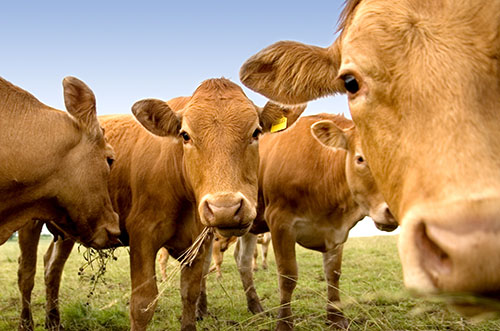
Abnormal temperature, pulse rate, and respiration rate are common signs of a health-related concern in your animal. Especially while the weather is so hot and dry, it’s important to monitor these vital signs so that you can identify issues early on and contact your veterinarian for further diagnosis.
But how can you know when something is wrong if you don’t know what is typical? Well keep reading — we will walk you through the most common vital sign measurements for different species of livestock.
Temperature
An animal’s temperature is generally taken rectally. A high body temperature can indicate that your animal is infected with a disease or virus that is causing the body to fight back, which is comparable to “getting a fever” as a human. Keep in mind, though, that your animal’s body temperature will naturally go up after prolonged exercise or excitement. Also, don’t take your animal’s temperature when it is extremely hot or cold outside as the air temperature can cause false readings. Listed below are the normal rectal temperature ranges of livestock.
Cattle: 100.4 – 102.9° F
Sheep: 100.9 – 103.8° F
Goats: 101.7 – 105.3° F
Swine: 102.0 – 103.6° F
Horses: 99.0 – 100.8° F
Pulse
When taking an animal’s pulse, the goal is to count the number of pulses that occur in a timed minute. For cattle, you can either place your hand on the outside of the cow’s jaw, on the soft place immediately above the cow’s inner dewclaw, or just above the cow’s hock joint. For sheep, goats, and pigs, place your hand on the inside of the animal’s thigh where the femoral artery comes close to the skin. And for horses, place your hand on the mandibular artery under the jaw, on the inside of the ankle in the fetlock region, or on the inside of the horse’s knee. Listed below are the normal pulse rates for livestock.
Cattle: 60 – 70 (rate/min.)
Sheep: 70 – 80 (rate/min.)
Goats: 70 – 80 (rate/min.)
Swine: 60 – 80 (rate/min.)
Horses: 32 – 44 (rate/min.)
Respiration
Your animal’s respiration rate can be determined by observing the rise and fall of the flanks to visually count breaths in a timed minute. If an animal is in pain or has a fever, its respiration rate will likely increase. Listed below are the normal respiration rates for livestock.
Cattle: 10 – 30 (rate/min.)
Sheep: 12 – 20 (rate/min.)
Goats: 12 – 20 (rate/min.)
Swine: 8 – 13 (rate/min.)
Horses: 8 – 16 (rate/min.)
Knowing when your animal’s vital signs are abnormal can help prevent major health issues before they happen. For a full line of animal health supplies, visit your local Co-op. Find the nearest location here.
For more content like this, check out the latest issue of The Cooperator.
But how can you know when something is wrong if you don’t know what is typical? Well keep reading — we will walk you through the most common vital sign measurements for different species of livestock.
Temperature
An animal’s temperature is generally taken rectally. A high body temperature can indicate that your animal is infected with a disease or virus that is causing the body to fight back, which is comparable to “getting a fever” as a human. Keep in mind, though, that your animal’s body temperature will naturally go up after prolonged exercise or excitement. Also, don’t take your animal’s temperature when it is extremely hot or cold outside as the air temperature can cause false readings. Listed below are the normal rectal temperature ranges of livestock.
Cattle: 100.4 – 102.9° F
Sheep: 100.9 – 103.8° F
Goats: 101.7 – 105.3° F
Swine: 102.0 – 103.6° F
Horses: 99.0 – 100.8° F
Pulse
When taking an animal’s pulse, the goal is to count the number of pulses that occur in a timed minute. For cattle, you can either place your hand on the outside of the cow’s jaw, on the soft place immediately above the cow’s inner dewclaw, or just above the cow’s hock joint. For sheep, goats, and pigs, place your hand on the inside of the animal’s thigh where the femoral artery comes close to the skin. And for horses, place your hand on the mandibular artery under the jaw, on the inside of the ankle in the fetlock region, or on the inside of the horse’s knee. Listed below are the normal pulse rates for livestock.
Cattle: 60 – 70 (rate/min.)
Sheep: 70 – 80 (rate/min.)
Goats: 70 – 80 (rate/min.)
Swine: 60 – 80 (rate/min.)
Horses: 32 – 44 (rate/min.)
Respiration
Your animal’s respiration rate can be determined by observing the rise and fall of the flanks to visually count breaths in a timed minute. If an animal is in pain or has a fever, its respiration rate will likely increase. Listed below are the normal respiration rates for livestock.
Cattle: 10 – 30 (rate/min.)
Sheep: 12 – 20 (rate/min.)
Goats: 12 – 20 (rate/min.)
Swine: 8 – 13 (rate/min.)
Horses: 8 – 16 (rate/min.)
Knowing when your animal’s vital signs are abnormal can help prevent major health issues before they happen. For a full line of animal health supplies, visit your local Co-op. Find the nearest location here.
For more content like this, check out the latest issue of The Cooperator.