
2021 Outlook
May 03, 2021
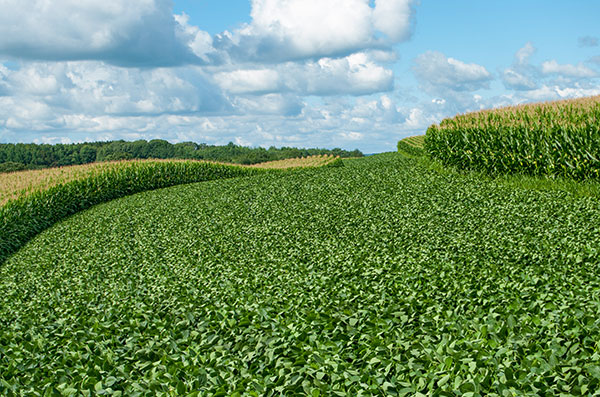
Based on a Prospective Plantings report released on March 31 from the USDA’s National Agricultural Statistics Service (NASS), U.S. farmers intend to plant an estimated 91.1 million acres of corn in 2021, up less than 1 percent from last year.
Acreage intentions for corn are up or unchanged in 24 of the 48 estimating states. The largest increases are expected in the Dakotas, where producers intend to plant a combined 8.9 million acres, an increase of 2 million acres from 2020. Producers across most of the Corn Belt intend to plant fewer acres than last year. If realized, the planted area of corn in Idaho and Oregon will be the largest on record.
Soybean growers intend to plant 87.6 million acres in 2021, up 5 percent from last year. If realized, this will be the third highest planted acreage on record. Compared with last year, planted acreage is expected to be up or unchanged in 23 of the 29 states estimated.
According to the NASS Tennessee field office, corn acreage planted in the state is estimated at 1 million acres, a 130,000-acre increase over last year. Tennessee farmers intend to plant 1.7 million acres of soybeans, up 50,000 acres from 2020.
Planting estimates for other Tennessee crops as compared to national statistics:
• Upland cotton acreage to be planted in Tennessee is forecast at 290,000 acres, up 50,000 acres from 2020. The U.S. total upland cotton acreage is estimated at 11.9 million acres, down slightly from the previous year.
• For the burley-producing states, growers intend to set 40,850 acres, 6 percent below last year.
• Producers intend to set 5,800 acres of dark-fired tobacco in Tennessee, which is unchanged from the previous year. Acreage set to dark-air tobacco was estimated at 3,900 acres, up 200 acres from 2020.
• Winter wheat seeded by Tennessee farmers in the fall of 2020 totaled 400,000 acres, up 100,000 acres from the previous year. Seeded acreage for the nation was 33.1 million acres, up 9 percent from 2019.
• Farmers in the state intend to harvest 1.7 million acres of hay, down 49,000 acres from 2020. U.S. farmers intend on harvesting 51.7 million acres of hay in 2021, down 1 percent from last year.