
Tips for Training Hunting Dogs

Jul 06, 2021
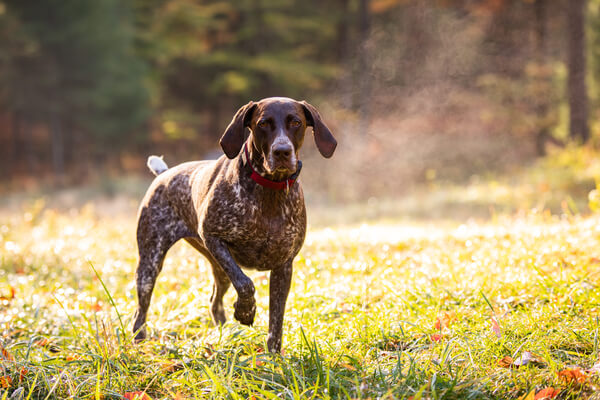

Ready to hit the field with a new furry friend to back you up? Raising a hunting dog calls for consistency and commitment, especially during the first year of your puppy’s life. Establishing a solid foundation in your dog’s training will ensure that he is able to safely and effectively do his job.
 
Here are four tips to help you train your newest hunting partner to reach his full potential:
 
  1. Establish yourself as the pack leader
Because dogs are pack animals, they operate within a hierarchy and are submissive to those who rank higher than them. Reinforce your dog’s natural instinct by establishing yourself as the leader and giving him a sense of security. A strong bond will create confidence in your dog, as well as a desire to work and willingness to please.
 
  1. Introduce and master basic commands
Before you can begin training your dog in the field, he must master rudimentary obedience. The common saying “practice makes perfect” is true, even for dogs. Stay consistent and repeat drills daily until your dog has mastered all of the basic commands. Later, you will be able to build on this foundation with more advanced training. As a puppy, your dog should know how to come, stay, sit, lay down, and heel.
 
  1. Expose your dog to new situations
Socializing your dog at a young age and conditioning him to sights and sounds that he will encounter in the field will set your dog up for success on the hunt. Introduce your dog to water, fields, kennels, boats, blinds, trucks, wildlife, other dogs, and anything else he might encounter in his life. Most importantly, make sure your dog is accustomed to the sound of gunshot to prevent him getting spooked and running off in the middle of a hunt.
 
  1. Invest in training tools
Certain hunting dog tools such as whistles and decoys can make your training more effective. Whistles will allow you to get your dog’s attention and control him from far away. You can use different pitches to signal different cues; for example, a long whistle could mean “come,” while a short whistle could mean “sit.” Decoys will give you the ability to simulate a hunting scenario so your dog knows what to expect in the field. Consider applying a training scent to the decoy and then train your dog to retrieve the decoy both on land and in water.
 
Training a hunting dog is hard work, but you will be rewarded with a strong and loyal companion. Visit your local Co-op for hunting supplies, dog nutrition, and training tools that will set you up for success in the field.
 
For more content like this, check out the latest issue of the Cooperator.

Read More News

Aug 10, 2026
Honey is a natural sweetener packed with antioxidants, which help reduce inflammation. It soothes sore throats and acts as a natural cough suppressant. Additionally, raw honey features antibacterial and anti-inflammatory properties that aid in wound and burn healing.
Jul 20, 2026
As homeowners continue to enjoy decorating with whimsical décor, one quirky lawn ornament is back and more popular than ever — the porch goose, complete with a whole suitcase of seasonal outfits. Now, a new generation of homeowners is embracing their nostalgic charm.
Jun 22, 2026
To control weeds around your home and farm, apply both pre-emergent and post-emergent treatments. Pre-emergent weed control is designed to prevent weed growth before weeds sprout. It should be applied twice in the spring, once in late summer, and once in the fall — so four times throughout the year. Post-emergent weed control targets those weeds that still seem to come through the soil even after pre-emergent treatment. Apply post-emergent control as needed throughout the growing season regularly from spring to fall.