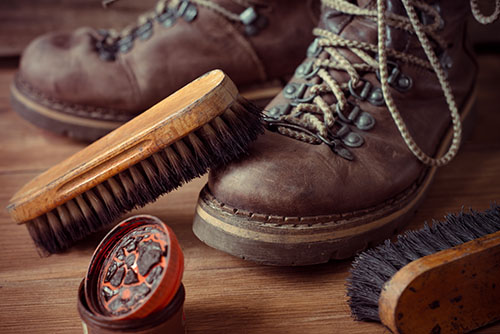
Tips for Leather Care

Sep 27, 2021


Colder weather is beginning to set in, and as lovely as the cooler temperatures may be after a brutal summer, it’s a nightmare for your leather goods.
 
Whether it be horse tack, boots, or purses, cold and dry weather absorbs all the moisture in your leather, leaving your items stiff, dull, and cracked.

Now is the time to plan ahead and consider the proper maintenance and protection routines for your leather products. Let our Co-op experts offer you some tips!
  1. Avoid prolonged exposure to cold.
Exposing your leather to freezing temperatures will dry out the leather and cause the surface to crack. The best way to avoid this is to keep your leather goods in a temperature-controlled space for storage. For example, don’t leave your boots or purse in your vehicle overnight; instead, carry them into the house with you. Also, store your tack in a dry room away from the elements. Even if you don’t have a heated storage room, any enclosed space will aid in retaining heat and keep your leather from cracking.
  1. Keep your leather clean.
Naturally, leather will accumulate dust, dirt, and other abrasive particles as you go about your daily life, which will lead to premature wear and tear. Regularly wipe down your leather goods with a slightly damp cloth every week or so to prevent this from happening. Make sure to clean your leather before conditioning it, which leads into our next tip.
  1. Moisturize your leather.
Remember that leather is a natural skin, and just like we moisturize our skin when it begins to dry out, we should do the same to our leather goods. A good leather conditioner will restore flexibility in the fibers and help prevent cracking. The frequency in which you should condition depends on the type of product. A leather handbag only needs to be conditioned every three months or so, whereas leather horse tack in heavy use may need to be conditioned every two to four weeks. A principle to keep in mind is to always apply conditioner on leather goods that have gotten wet before allowing them to dry out.
 
There are many other methods of preserving leather such as waterproofing and specific storage practices. However, the tips mentioned above will give you a great place to start in keeping your leather flexible, strong, and functional all year long. Visit your local Co-op for leather conditioners and care products!
 
For more content like this, check out the latest issue of the Cooperator.

Read More News

Aug 10, 2026
Honey is a natural sweetener packed with antioxidants, which help reduce inflammation. It soothes sore throats and acts as a natural cough suppressant. Additionally, raw honey features antibacterial and anti-inflammatory properties that aid in wound and burn healing.
Jul 20, 2026
As homeowners continue to enjoy decorating with whimsical décor, one quirky lawn ornament is back and more popular than ever — the porch goose, complete with a whole suitcase of seasonal outfits. Now, a new generation of homeowners is embracing their nostalgic charm.
Jun 22, 2026
To control weeds around your home and farm, apply both pre-emergent and post-emergent treatments. Pre-emergent weed control is designed to prevent weed growth before weeds sprout. It should be applied twice in the spring, once in late summer, and once in the fall — so four times throughout the year. Post-emergent weed control targets those weeds that still seem to come through the soil even after pre-emergent treatment. Apply post-emergent control as needed throughout the growing season regularly from spring to fall.