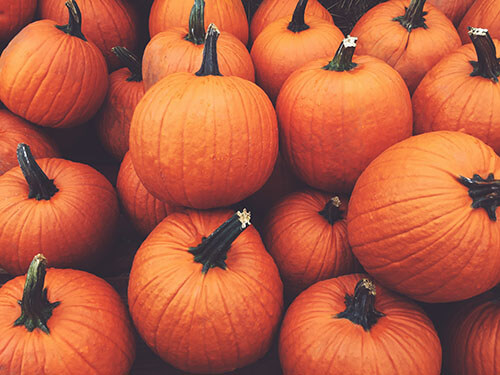
Prolong your pumpkins

Oct 05, 2020


October is here and that brings pumpkin season. Pumpkin flavored coffee, pumpkin pie, and pumpkins displayed on the porches across town. However, once they’re Jack O’lanterns, or been on the porch, they start to lose their luster. Check out these tips to keep your pumpkin pristine all fall long.
 
  1. Clean, clean, and clean!
The wet interior of the pumpkins will grow mold quickly. Reduce the risk by cleaning the inside of gutted pumpkins. Add one teaspoon of bleach to one quart of water and use the solution to clean the pumpkin outside. If you can, give it a bath of 2/3 cup of bleach in water for up to 24 hours.
 
  1. Avoid carving if possible.
Prolong the life of your pumpkin by leaving it in tack. Although Jacko lanterns are fun, not carving the pumpkin ensures it lives from the beginning of October until you’re ready to be done with it after Thanksgiving.
 
  1. Protect it from extreme temps.
Bringing in pumpkins in extreme heat and cold temperatures help prolong its life. Putting it on a little base for easy transport inside and out is recommended for easy moving.
 
  1. Apply petroleum jelly.
Seal the insides with petroleum jelly. It keeps excess moisture out and seals in freshness. Make sure to coat all the little nooks and cuts to seal each spot. Reapply as needed.
 
We wish you a happy fall and sweet memories made with family carving pumpkins and decorating for the season.
 

Read More News

Feb 16, 2026
Chick season is almost upon us. Chicks will start showing up in stores mid- to late-February. The idea of raising a flock can be both exciting and intimidating for first-time chicken owners. With a little preparation, though, it’s easy to master the technicalities of poultry care.
Feb 02, 2026
To make quick work of seeding or fertilizing small or large acreage, food plots, or yards, Herd Seeder Company has a variety of products that can get the job done.
Jan 26, 2026
Winter often subjects dogs to cold, ice, and chemicals, requiring owners to protect their pets by limiting their outdoor time. Use booties and coats for vulnerable animals such as small, short-haired, senior, or sick pets and protect their paws from salt. Additionally, provide warm shelter and water, and be mindful of dangerous temperatures — below 32°F is risky and below 20°F is dangerous for most. Hypothermia and frostbite are risks, so watch for shivering, anxiety, or lifted paws, and prioritize indoor exercise on harsh days.