
10 Tips for Camping with Your Dog

Aug 26, 2024
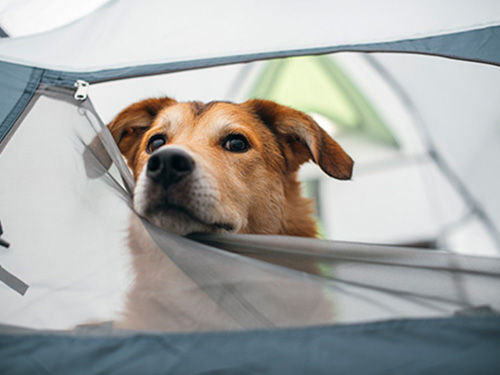

A dog looking out of a tent while resting its chin on the zipper door.
Planning a camping trip with your dog? Follow these tips to ensure a safe and enjoyable experience for both you and your furry companion.
 
  1. Plan ahead
Check the campground’s pet policy and rules and reserve your campsite early, especially during peak travel times. You will also want to prepare your dog for interactions with others, which includes teaching basic obedience commands and scheduling a vet appointment for any necessary vaccinations.
 
  1. Take a recent picture
Before heading out, snap a clear, straight-on photo of your dog in natural light, as well as any unique spots or markings they may have. These photos can be shown to friends in case your dog gets loose and becomes lost.
 
  1. Watch your dog
Always keep an eye on your dog, whether at the campsite, in the car, at the dog park, or during activities. Even if your own dog is well-mannered, other dogs or people may not behave as expected, so constant supervision is key to ensure your dog has a positive experience.
 
  1. Get the right gear
While a standard leash and collar are suitable for your next camping trip, consider upgrading to specialized gear like swimming leashes, reflective harnesses, or collapsible bowls to make the trip easier and more enjoyable for you and your dog.
 
  1. Watch for allergies
Dogs can have seasonal allergies just like humans, so keep an eye out for symptoms like sneezing, wheezing, or itching. Consult your veterinarian for treatment options and try to limit exposure to outdoor allergens during high-pollen times.
 
  1. Bring toys
Don’t rely on the great outdoors alone to keep your dog entertained. The weather can quickly change, and you will want to make sure you have plenty of toys to keep your dog from getting bored while you wait for the weather to clear. Pack outdoor-safe toys like their favorite rope chews or tennis balls.
 
  1. Keep your dog hydrated
Your dog will require more water than usual while being outdoors and in an unfamiliar environment. Adult dogs typically drink about one ounce of water per pound of body weight each day, but you will need to offer them more while camping. Use a collapsible bowl to keep your dog hydrated on the go, and fill up a large, outdoor-safe bowl at the campsite.
 
  1. Do a trial run
If your dog is new to camping, try a backyard campout first to get them used to the experience in a controlled environment. Behave exactly as you would on a real camping trip — keep your dog leashed or secured at all times, spend time around a fire pit, and invite family and friends to stop by for some social interaction.
 
  1. Watch out for wildlife
Wildlife, including plants and animals, can pose risks on your camping trip. Keep an eye on your surroundings, and never let your dog drink stagnant water that might contain harmful algae. Research local plants to identify any that are poisonous before hiking with your dog.
 
  1. Bring a first-aid kit
Pack a pet-friendly first-aid kit with essentials like gauze, nonstick bandages, and your dog’s vet records. Research nearby emergency vet services before your trip.
 
We hope these tips will help you to have a fun, safe camping trip with your dog this fall. If you need quality pet supplies, visit your local Co-op for a variety of leashes and harnesses, bowls, health products, and dog food.
 
Find your nearest Co-op location here. For more content like this, check out the latest issue of The Cooperator.


Read More News

Jun 22, 2026
To control weeds around your home and farm, apply both pre-emergent and post-emergent treatments. Pre-emergent weed control is designed to prevent weed growth before weeds sprout. It should be applied twice in the spring, once in late summer, and once in the fall — so four times throughout the year. Post-emergent weed control targets those weeds that still seem to come through the soil even after pre-emergent treatment. Apply post-emergent control as needed throughout the growing season regularly from spring to fall.
 
May 25, 2026

Applying insecticide at the right time is key to protecting your lawn. Too early, and pests aren’t active; too late, and damage like thinning turf and brown patches has already occurred. Because different pests peak at different times, effective control depends on timing treatments with their life cycles and local conditions.

Apr 13, 2026
April is an ideal month to experience Tennessee’s outdoors, with mild weather, blooming landscapes, and lighter crowds before summer. Popular activities include exploring state parks, hiking for exercise, spotting wildflowers, and attending spring festivals and community events.