
USDA Makes Available Additional $80 Million in Funding to Support Long-Term Resilience in the Dairy Industry
Mar 07, 2022
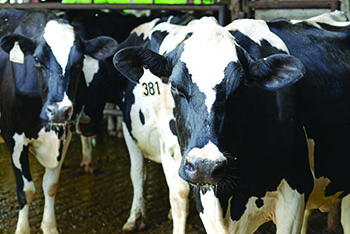
The U.S. Department of Agriculture (USDA) announced an additional investment of $80 million in the Dairy Business Innovation (DBI) Initiatives. In November 2021, DBI awarded $18.4 million to three current Initiatives at the University of Tennessee, Vermont Agency for Food and Marketing, and University of Wisconsin, and $1.8 million to a new initiative at California State University, Fresno. Under the existing DBI program, which was previously announced through a FY21 Request for Applications (RFA), each Initiative can submit additional proposals for up to $20 million in American Rescue Plan funds to further support processing capacity expansion, on-farm improvements, and technical assistance to producers.
“The pandemic has demonstrated that dairy producers and regional dairy processors, particularly those engaged in value-added production, faced systemic shocks over the past several years,” said Agriculture Secretary Tom Vilsack. “We have heard directly from producers and processors – particularly organic producers and processors in the Northeast – on how we can work with the industry to build long-term resilience of regional dairy supply chains. The Dairy Business Innovation Initiatives have supported regional-focused efforts tailored to the needs of dairy farmers and businesses locally. This additional funding will expand the capacity of the four initiatives to provide technical assistance and sub-grants exponentially.”
Since its inception in 2019, DBI initiatives have provided valuable technical assistance and sub-grants to dairy farmers and businesses across their regions, assisting them with business plan development, marketing, and branding, as well as increasing access to innovative production and processing techniques to support the development of value-added products. Separate from this supplemental ARP funding, AMS plans to announce a new DBI Request for Applications later in FY22 contingent upon appropriations.
AMS supports U.S. food and agricultural product market opportunities while increasing consumer access to fresh, healthy foods through applied research, technical services, and congressionally funded grants.
To learn more about AMS’s investments in enhancing and strengthening agricultural systems, visit www.ams.usda.gov/grants.
For more content like this, check out the latest issue of the Cooperator.
“The pandemic has demonstrated that dairy producers and regional dairy processors, particularly those engaged in value-added production, faced systemic shocks over the past several years,” said Agriculture Secretary Tom Vilsack. “We have heard directly from producers and processors – particularly organic producers and processors in the Northeast – on how we can work with the industry to build long-term resilience of regional dairy supply chains. The Dairy Business Innovation Initiatives have supported regional-focused efforts tailored to the needs of dairy farmers and businesses locally. This additional funding will expand the capacity of the four initiatives to provide technical assistance and sub-grants exponentially.”
Since its inception in 2019, DBI initiatives have provided valuable technical assistance and sub-grants to dairy farmers and businesses across their regions, assisting them with business plan development, marketing, and branding, as well as increasing access to innovative production and processing techniques to support the development of value-added products. Separate from this supplemental ARP funding, AMS plans to announce a new DBI Request for Applications later in FY22 contingent upon appropriations.
AMS supports U.S. food and agricultural product market opportunities while increasing consumer access to fresh, healthy foods through applied research, technical services, and congressionally funded grants.
To learn more about AMS’s investments in enhancing and strengthening agricultural systems, visit www.ams.usda.gov/grants.
For more content like this, check out the latest issue of the Cooperator.