
American Agricultural Exports Shattered Records in 2021
Feb 28, 2022
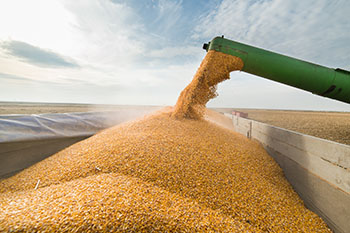
The American agricultural industry posted its highest annual export levels ever recorded in 2021, Secretary of Agriculture Tom Vilsack announced on February 8. The final 2021 trade data published by the Department of Commerce shows that exports of U.S. farm and food products to the world totaled $177 billion, topping the 2020 total by 18 percent, and eclipsing the previous record, set in 2014, by 14.6 percent.
“These record-breaking trade numbers demonstrate that U.S. agriculture is incredibly resilient as it continues to provide high-quality, cost-competitive farm and food products to customers around the globe and that the Biden-Harris Administration’s agenda is working for American farmers and producers,” Vilsack said. “This is a major boost for the economy as a whole, and particularly for our rural communities, with agricultural exports stimulating local economic activity, helping maintain our competitive edge globally, supporting producers’ bottom lines, and supporting more than 1.3 million jobs on the farm and in related industries such as food processing and transportation.”
The United States’ top 10 export markets all saw gains in 2021, with six of the 10 – China, Mexico, Canada, South Korea, the Philippines, and Colombia – setting new records. Worldwide exports of many U.S. products, including soybeans, corn, beef, pork, dairy, distillers grains, and pet food, also reached all-time highs. China remained the top export destination, with a record $33 billion in purchases, up 25 percent from 2020, while Mexico inched ahead of Canada to capture the number two position with a record $25.5 billion, up 39 percent from last year.
“It’s clear that our international trading partners are responding favorably to a return to certainty from the United States,” Vilsack said. “We owe our thanks to America’s agricultural producers who always work hard to be reliable global suppliers and the Biden-Harris Administration and United States Department of Agriculture (USDA) are fighting hard on their behalf to keep our home-grown products moving around the world. We’re strengthening relationships with our trading partners and holding those partners accountable for their commitments. We’re addressing transportation and infrastructure challenges through the work of the Administration’s Supply Chain Task Force and calling out ocean carriers that are putting profits above their responsibility to serve both importers and exporters. And we’re expanding opportunities for agricultural exports by knocking down trade barriers and partnering with industry on marketing and promotion efforts worldwide.”
For a detailed summary of 2021 U.S. agricultural exports by market, view the 2021 U.S. agricultural exports by market summary.
For a detailed summary of 2021 U.S. agricultural exports by product, view the 2021 U.S. agricultural exports by product summary.
For more content like this, check out the latest issue of the Cooperator.
“These record-breaking trade numbers demonstrate that U.S. agriculture is incredibly resilient as it continues to provide high-quality, cost-competitive farm and food products to customers around the globe and that the Biden-Harris Administration’s agenda is working for American farmers and producers,” Vilsack said. “This is a major boost for the economy as a whole, and particularly for our rural communities, with agricultural exports stimulating local economic activity, helping maintain our competitive edge globally, supporting producers’ bottom lines, and supporting more than 1.3 million jobs on the farm and in related industries such as food processing and transportation.”
The United States’ top 10 export markets all saw gains in 2021, with six of the 10 – China, Mexico, Canada, South Korea, the Philippines, and Colombia – setting new records. Worldwide exports of many U.S. products, including soybeans, corn, beef, pork, dairy, distillers grains, and pet food, also reached all-time highs. China remained the top export destination, with a record $33 billion in purchases, up 25 percent from 2020, while Mexico inched ahead of Canada to capture the number two position with a record $25.5 billion, up 39 percent from last year.
“It’s clear that our international trading partners are responding favorably to a return to certainty from the United States,” Vilsack said. “We owe our thanks to America’s agricultural producers who always work hard to be reliable global suppliers and the Biden-Harris Administration and United States Department of Agriculture (USDA) are fighting hard on their behalf to keep our home-grown products moving around the world. We’re strengthening relationships with our trading partners and holding those partners accountable for their commitments. We’re addressing transportation and infrastructure challenges through the work of the Administration’s Supply Chain Task Force and calling out ocean carriers that are putting profits above their responsibility to serve both importers and exporters. And we’re expanding opportunities for agricultural exports by knocking down trade barriers and partnering with industry on marketing and promotion efforts worldwide.”
For a detailed summary of 2021 U.S. agricultural exports by market, view the 2021 U.S. agricultural exports by market summary.
For a detailed summary of 2021 U.S. agricultural exports by product, view the 2021 U.S. agricultural exports by product summary.
For more content like this, check out the latest issue of the Cooperator.