
Take time to update your field boundaries
Nov 23, 2020
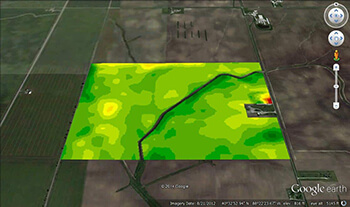
Winter is a great time to make sure your field boundaries in your precision ag software are up-to-date and accurate. Having correct field boundaries plays an important role as the foundation to your precision program.
First, it gives you an accurate measure of the actual acreage in the field, allowing you to calculate chemical, nutrient, and planting requirements.
Second, if those boundaries are not up-to-date, going outside a field boundary once those prescriptions are made and equipment is in the field will cause the equipment to revert back to a preset default rate. In addition, some software will only bring in yield data that is contained within the boundary and ignore points outside of it.
Accurate field boundaries can be created manually by using iOS FieldAnalytics app while driving the perimeter of
the field. Boundaries also can be taken from previous application and yield maps.
Contact your local Co-op agronomist to ensure your boundaries are updated and accurate.
First, it gives you an accurate measure of the actual acreage in the field, allowing you to calculate chemical, nutrient, and planting requirements.
Second, if those boundaries are not up-to-date, going outside a field boundary once those prescriptions are made and equipment is in the field will cause the equipment to revert back to a preset default rate. In addition, some software will only bring in yield data that is contained within the boundary and ignore points outside of it.
Accurate field boundaries can be created manually by using iOS FieldAnalytics app while driving the perimeter of
the field. Boundaries also can be taken from previous application and yield maps.
Contact your local Co-op agronomist to ensure your boundaries are updated and accurate.