
Planting Outlook 2022
May 16, 2022
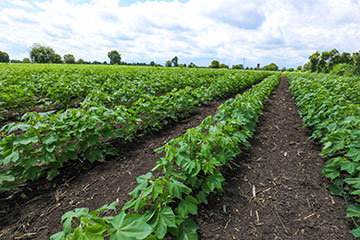
Based on a Prospective Plantings report released on March 31 from the United States Department of Agriculture’s (USDA) National Agricultural Statistic Service (NASS), Tennessee farmers farmers intend to plant an estimated 970,000 acres of corn in 2022, 50,000 lower than 2021. U.S. corn growers intend to plant 89.5 million acres for all purposes in 2022, down 4% from 2021 and 1% lower than 2020.
Soybean acreage in Tennessee was expected to total 1.85 million acres, up 300,000 from the previous year. U.S. soybean planted area for 2022 is estimated at 91 million acres, up 4% from last year.
Planting estimates for other Tennessee crops as compared to national statistics:
• Upland cotton acreage to be planted in Tennessee is forecast at 330,000, up 55,000 acres from 2021. The U.S. total upland cotton acreage is estimated at 12.1 million acres, up 9% from the previous year.
• Burley tobacco growers in Tennessee intend to set 3,200 acres for harvest, up 300 acres from 2021. For the burley producing states, growers intend to set 41,500 acres, 1% above last year.
• Producers intend to set 6,600 acres of dark-fired tobacco in Tennessee, up 600 acres from the previous year. Acreage set to dark-air tobacco was estimated at 4,800 acres, up 800 acres from 2021.
• Winter wheat seeded by Tennessee farmers in the fall of 2021 totaled 420,000 acres, up 20,000 acres from the previous year. Seeded acreage for the nation was 34.2 million acres, up 2% from 2021.
• Farmers in the state intend to harvest 1.50 million acres of all hay, down 205,000 acres from 2021. U.S. farmers intend on harvesting 50.3 million acres of hay in 2022, down 1% from last year.
Soybean acreage in Tennessee was expected to total 1.85 million acres, up 300,000 from the previous year. U.S. soybean planted area for 2022 is estimated at 91 million acres, up 4% from last year.
Planting estimates for other Tennessee crops as compared to national statistics:
• Upland cotton acreage to be planted in Tennessee is forecast at 330,000, up 55,000 acres from 2021. The U.S. total upland cotton acreage is estimated at 12.1 million acres, up 9% from the previous year.
• Burley tobacco growers in Tennessee intend to set 3,200 acres for harvest, up 300 acres from 2021. For the burley producing states, growers intend to set 41,500 acres, 1% above last year.
• Producers intend to set 6,600 acres of dark-fired tobacco in Tennessee, up 600 acres from the previous year. Acreage set to dark-air tobacco was estimated at 4,800 acres, up 800 acres from 2021.
• Winter wheat seeded by Tennessee farmers in the fall of 2021 totaled 420,000 acres, up 20,000 acres from the previous year. Seeded acreage for the nation was 34.2 million acres, up 2% from 2021.
• Farmers in the state intend to harvest 1.50 million acres of all hay, down 205,000 acres from 2021. U.S. farmers intend on harvesting 50.3 million acres of hay in 2022, down 1% from last year.
For more content like this, check out the latest issue of the Cooperator.