
FSG 506OG Orchardgrass provides attractive option for forage needs
Jul 29, 2019
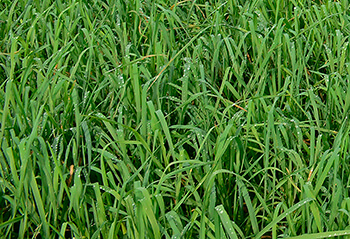
Claiborne Farmers Cooperative customer David Greene was one of the first Co-op customers to have the opportunity to try the new FSG 506OG Orchardgrass from Allied Seed at his farm in LaFollette. And he has been more than pleased with the performance of the new variety and the nutritional value it has provided for his beef cattle.
David, who works an off-the farm job with Diamond V, a manufacturer of additives, travels throughout the world as part of his professional career, but he also finds time to farm more than 240 acres and manage a herd of about 60 Angus cows.
FSG 506OG Orchardgrass was developed as part of Allied Seed’s Farm Science Genetics® brand. Tennessee Farmers Cooperative is one of three owners of the innovative seed company launched in August 2000. FSG 506OG Orchardgrass is an early-to-medium maturing orchardgrass that’s an excellent choice for hay, silage, and pasture, say Allied Seed officials. The variety was selected for its improved seedling vigor, high yield potential, and excellent disease resistance. The parent plants for the variety were selected from a nursery in Tennessee.
“It can be planted as a pure stand or it works equally well mixed with other perennial grasses or legumes,” says Tom Bible, TFC agronomy specialist.
David was one of a few select farmers who had the opportunity to test the new orchardgrass variety. He sowed 20 acres of it at the rate of 22 pounds per acre during the second week of March 2016.
“The growing season got off to a good start,” he says. “We got some rainfall on it. It came up well, and we got a good stand. We had good luck with it.”
David harvested 41 rolls of hay during the first cutting. The forage was cut in the boot stage for optimum nutrition. The bales averaged 1,143 pounds for a yield of approximately 2.5 tons per acre. He harvested 693 square bales on the second cutting.
He had the first cutting of his 2016 harvest analyzed and the results were impressive, suggesting that digestibility was good.
Other orchardgrass varieties David has grown have not typically displayed that kind of quality. Even more notable, he says, is that FSG 506OG often has higher than average sugar content. This spring’s first cutting was even better with greater digestible energy and an impressive and better-than-average protein content.
“That’s a big thing,” he says. “That’s [a component of] the energy. Protein is the easiest thing to add in a ration. The key [to proper nutrition] is higher digestible forages. It looks like the FSG orchardgrass is better than other varieties in digestibility.”
Check with your local Co-op for FSG 506OG Orchardgrass, and other varieties for your pasture and hay needs.
David, who works an off-the farm job with Diamond V, a manufacturer of additives, travels throughout the world as part of his professional career, but he also finds time to farm more than 240 acres and manage a herd of about 60 Angus cows.
FSG 506OG Orchardgrass was developed as part of Allied Seed’s Farm Science Genetics® brand. Tennessee Farmers Cooperative is one of three owners of the innovative seed company launched in August 2000. FSG 506OG Orchardgrass is an early-to-medium maturing orchardgrass that’s an excellent choice for hay, silage, and pasture, say Allied Seed officials. The variety was selected for its improved seedling vigor, high yield potential, and excellent disease resistance. The parent plants for the variety were selected from a nursery in Tennessee.
“It can be planted as a pure stand or it works equally well mixed with other perennial grasses or legumes,” says Tom Bible, TFC agronomy specialist.
David was one of a few select farmers who had the opportunity to test the new orchardgrass variety. He sowed 20 acres of it at the rate of 22 pounds per acre during the second week of March 2016.
“The growing season got off to a good start,” he says. “We got some rainfall on it. It came up well, and we got a good stand. We had good luck with it.”
David harvested 41 rolls of hay during the first cutting. The forage was cut in the boot stage for optimum nutrition. The bales averaged 1,143 pounds for a yield of approximately 2.5 tons per acre. He harvested 693 square bales on the second cutting.
He had the first cutting of his 2016 harvest analyzed and the results were impressive, suggesting that digestibility was good.
Other orchardgrass varieties David has grown have not typically displayed that kind of quality. Even more notable, he says, is that FSG 506OG often has higher than average sugar content. This spring’s first cutting was even better with greater digestible energy and an impressive and better-than-average protein content.
“That’s a big thing,” he says. “That’s [a component of] the energy. Protein is the easiest thing to add in a ration. The key [to proper nutrition] is higher digestible forages. It looks like the FSG orchardgrass is better than other varieties in digestibility.”
Check with your local Co-op for FSG 506OG Orchardgrass, and other varieties for your pasture and hay needs.